
Top 7 AI Tools for Data Analytics in 2026
February 13, 2026 |
By Shawaz
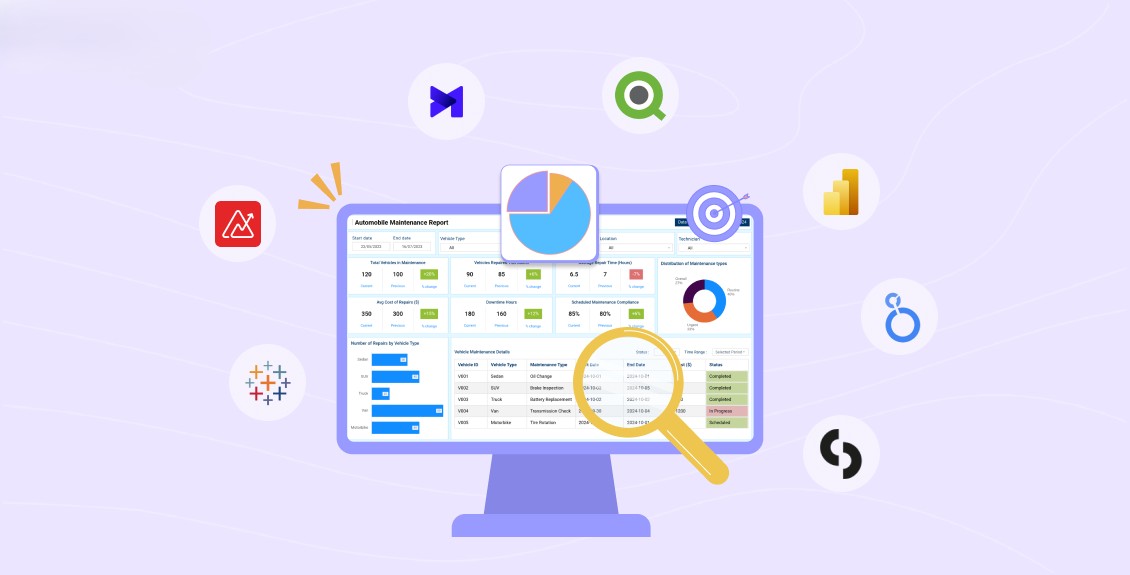
Data is everywhere but raw data alone doesn’t drive business growth.
What matters is how quickly you can turn that data into insights, predictions, and decisions.
That’s where AI-powered data analytics tools come in.
In 2026, analytics is no longer just dashboards and reports. It’s:
- Automated insights
- Predictive forecasting
- Natural language queries
- Real-time decision intelligence
Here are the top AI tools for data analytics businesses are using today.
1. Microsoft Power BI (With AI Features)
Power BI has evolved into one of the most powerful AI-enabled analytics platforms.
AI Capabilities
- Natural language queries (“Show me sales growth by region”)
- AI-driven data insights
- Automated anomaly detection
- Built-in machine learning models
Best For
SMBs, enterprises, and agencies already using the Microsoft ecosystem.
Why It Stands Out
It combines business intelligence + AI in a cost-effective way.
2. Tableau + AI (Einstein & GPT Integration)
Tableau remains a leader in visual analytics, now enhanced with AI.
AI Capabilities
- AI-generated insights
- Predictive modeling
- Smart data explanations
- Conversational analytics
Best For
Organizations that want deep visual storytelling with AI.
3. Google Looker
Looker is powerful for companies working heavily with cloud data warehouses.
AI Capabilities
- AI-powered data modeling
- Real-time analytics
- Natural language exploration
- Integration with BigQuery ML
Best For
Cloud-first companies and startups using Google Cloud.
Python + Machine Learning (Custom AI Analytics)
For businesses that want custom AI models, Python remains unmatched.
Key Libraries
- Pandas → data processing
- Scikit-learn → predictive analytics
- TensorFlow / PyTorch → deep learning
- Prophet → sales forecasting
Best For
- Predictive sales forecasting
- Customer churn prediction
- Demand forecasting
- Custom KPI modeling
Why It Stands Out
You get fully tailored analytics, not just dashboards.
5. IBM Watson Analytics
IBM Watson focuses on enterprise-grade AI analytics.
AI Capabilities
- Automated data discovery
- Predictive insights
- NLP-based queries
- Advanced statistical modeling
Best For
Large enterprises handling complex datasets.
6. Qlik with AI
Qlik uses an associative data engine combined with AI.
AI Capabilities
- AI-generated insights
- Automated data preparation
- Forecasting and trend analysis
Best For
Companies needing fast, interactive analytics across multiple data sources.
7. Alteryx
Alteryx is built for analytics automation.
AI Capabilities
- No-code machine learning
- Automated data pipelines
- Predictive modeling workflows
Best For
Businesses that want AI analytics without coding.
How to Choose the Right AI Analytics Tool
Here’s a simple guide:
Choose Power BI if:
- You want affordable AI dashboards
- You use Excel, Azure, or Microsoft tools
Choose Tableau if:
- You want advanced visual analytics
- You need storytelling dashboards
Choose Looker if:
- Your data is in Google Cloud
- You want real-time cloud analytics
Choose Python ML if:
- You need predictive models
- You want custom AI solutions
Choose Alteryx if:
- You want no-code AI workflows
Choose IBM Watson if:
- You’re an enterprise with complex data
Final Thoughts
You don’t need a data science team to start using AI in analytics.
Many tools now offer low-code or no-code AI features that turn raw data into actionable insights.
The key is:
➡ Start with your business goal
➡ Choose the right tool
➡ Build a data-driven culture